
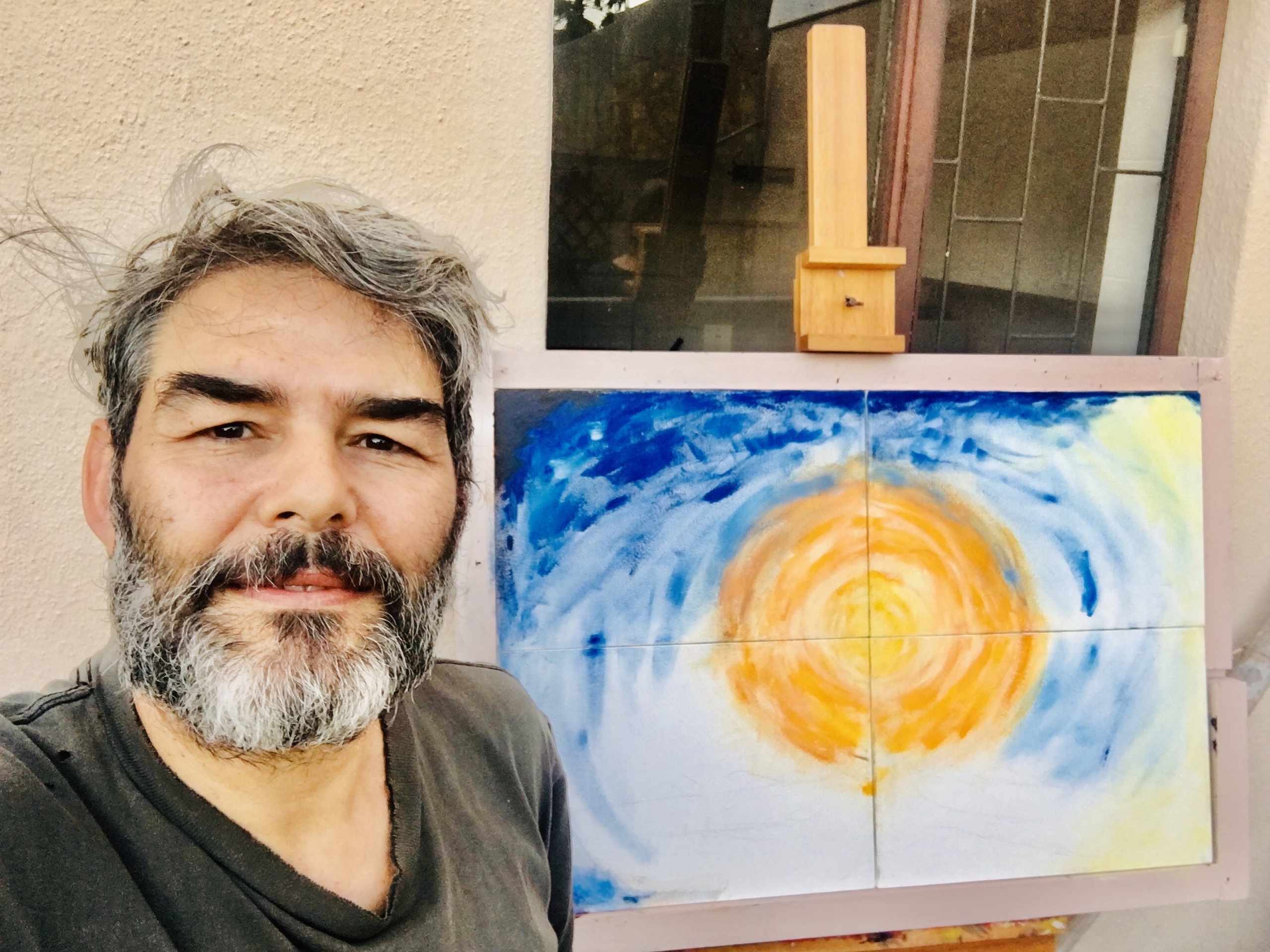
Even when the right colour is applied, a freshly painted section can appear patchy. One pass is darker than the next, some areas reveal the underlying material, and others have built up into ridges as the paint thickened. In acrylic, uneven coverage typically results from multiple minor mistakes compounding: inadequate paint load, too much water, repeated strokes over the same section, or attempting to push a layer beyond its working window. Correcting the issue requires less pressure and more control over the amount of paint being applied.
The amount of paint on your brush directly impacts flat coverage. With only the very tips of a flat brush holding paint, the first stroke lays down a heavy application, and subsequent strokes quickly run out. Don’t soak the whole brush in paint, but load the bristles more generously. Then spread that paint over a reasonably sized section. Keep even pressure and allow the full width of the brush to deliver coverage. Also, using a brush too small for the intended shape forces excessive overlapping strokes; switching to a broader flat brush simplifies covering larger backgrounds or colour fields.
You can experiment with acrylic paper or canvas boards to visualise these effects. Pick one colour and paint three roughly equal-sized shapes. Paint the first with a barely loaded brush until you almost run out. Paint the second shape with a moderately loaded brush using fewer strokes. Paint the third shape using a heavily diluted mix. Allow all three to dry completely. You should notice a greater difference in coverage once dry, revealing which cause was responsible for any visible streaking.
The moment paint starts to feel tacky is just as important as its viscosity. Although it looks pliable moments earlier, acrylic dries fast, and dragging a brush across a partially dried section moves pigment around. This produces lines, ridges, or bare spots. When your brush no longer moves smoothly and starts grabbing the surface, pushing further usually complicates repairs. Instead, wait for it to dry. Acrylic thrives in layers, so there’s no urgency to achieve perfect coverage while wet.
A second pass with the same colour is far simpler than attempting one thin coat to do the job. Wait for the initial layer to dry. Mix a fresh batch of the same colour, load the brush appropriately, and cover the section with confident strokes. Resist the urge to revisit and repaint over areas that already look complete. If a boundary needs refinement, use a smaller brush for precision once the rest of the section is finished, rather than returning to the larger brush to constantly tweak the overall shape.
When the next flat section begins to streak, assess it before adding more paint. Notice where the brush went dry, where excess water diluted the colour, or where overlapping strokes disrupted already-starting-to-dry pigment. Apply only one adjustment on a new section. Fewer strokes, an appropriately loaded brush, or a second dry layer can tell you more about coverage than overworking the area in hopes of achieving a flawless finish.